
Key facts
- United Nations Secretary-General António Guterres criticised powerful fossil fuel interests for their influence on global climate action1
- Earlier drafts of the conference’s proposed cover decision included provisions relating to the transition away from fossil fuels and increased adaptation finance for developing countries1
- COP31 ended on Sunday without a climate pact, UN News said2
- Focus now shifts to COP32 in Addis Ababa, Ethiopia2
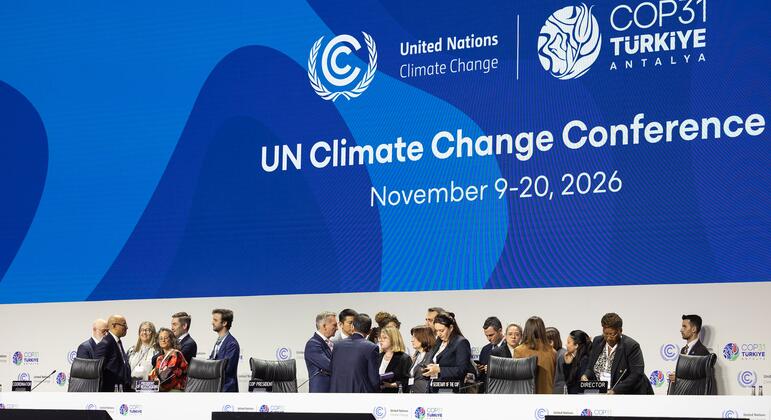
United Nations Secretary-General António Guterres has criticised powerful fossil fuel interests for their influence on global climate action after countries failed to reach consensus on an overarching agreement at the 31st United Nations Climate Change Conference (COP31) in Antalya, Türkiye.1
In a statement issued after the conference, Mr Guterres expressed disappointment with the outcome, warning that the failure to secure an agreement came at a time when rising global temperatures and worsening climate extremes demanded more urgent action.1
Fossil fuel language the main obstacle
The conference, which opened on 9 November, was scheduled to conclude on 20 November but ran over as countries struggled to resolve differences over the proposed outcome..1 Negotiators were unable to bridge differences between a coalition of climate-vulnerable nations and countries pushing for a stronger commitment to move away from coal, oil and gas, and those seeking to protect economies heavily dependent on fossil fuel exports.2
Earlier drafts of the conference’s proposed cover decision included provisions relating to the transition away from fossil fuels and increased adaptation finance for developing countries.1 A revised draft circulated on 19 November removed references to transitioning away from fossil fuels and dropped an earlier proposal specifying at least $120 billion annually for adaptation by 2035.1
The failure to adopt an overarching outcome does not mean that all decisions taken during the conference were invalidated..1 Decisions adopted separately on other negotiating matters remain distinct from the proposed overarching agreement.1
Beyond
Beyond the diplomatic disagreements, Mr Guterres warned that the world was approaching a dangerous threshold in global warming..1 He said the world was now poised to exceed the 1.5°C threshold, making immediate emissions reductions essential to limit the extent and duration of any overshoot.1
“There may be no consensus in the negotiating room. There is no ambiguity in the science,” Guterres said.1 “Temperatures keep shattering records. Climate extremes keep intensifying. Emissions remain far too high. And every delay makes our task harder and more costly.”1
COP31 president Murat Kurum
COP31 President Murat Kurum is Türkiye’s environment minister..2
“I understand that there is no agreement on this text. For that reason, these decisions have not been adopted,” he said.
What comes next
Focus now shifts to COP32 in Addis Ababa, Ethiopia, where governments will face many of the questions left unanswered in Antalya, from the transition away from fossil fuels to mobilizing climate finance for developing countries, UN News said.2